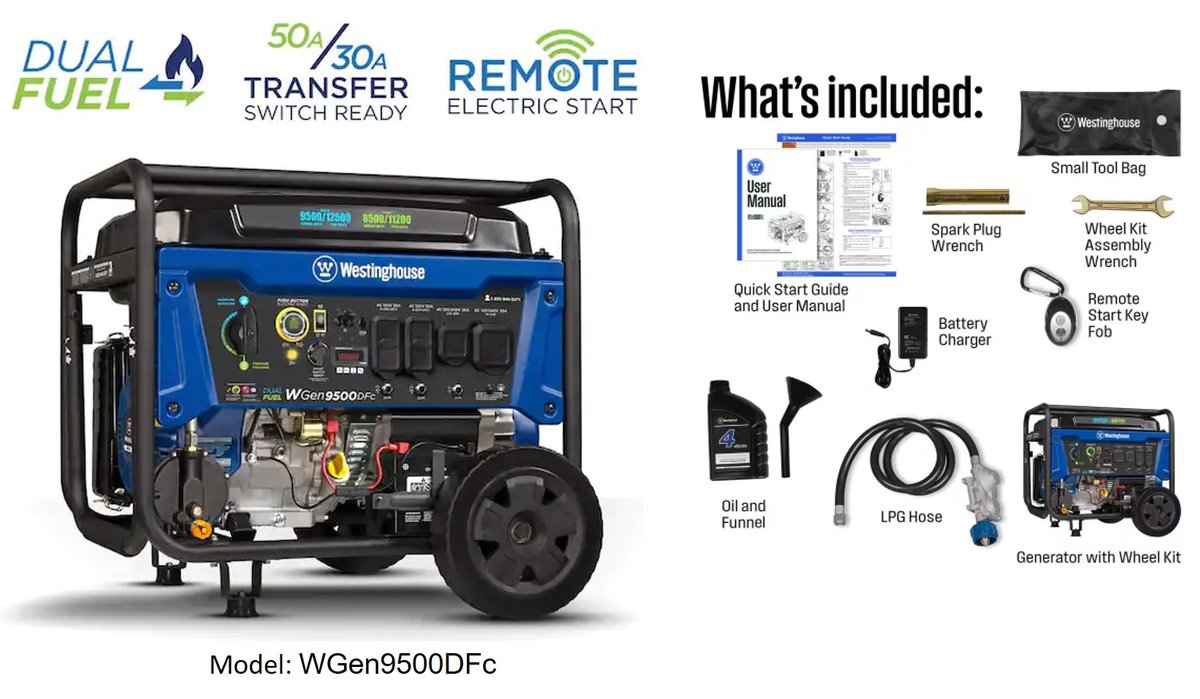
When the power goes out, your Westinghouse dual fuel generator is a lifeline, a humming testament to preparedness. But owning the generator is just the first step. To truly unlock its potential—to enhance its safety, extend its lifespan, and ensure it's ready when you need it most—you need the right Westinghouse Dual Fuel Generator Accessories. These aren't just add-ons; they're essential components that transform your unit from a functional piece of equipment into a robust, reliable power solution tailored to your specific needs.
Think of it like owning a high-performance vehicle. It runs great off the lot, but with the right tires for winter, a roof rack for adventures, and a top-tier maintenance plan, it becomes a much more capable and enduring asset. The same goes for your generator. Let's dive into the accessories that make a real difference.
At a glance
- Boost safety: Critical accessories like CO detectors and grounding kits protect you and your home.
- Extend lifespan: Covers, maintenance kits, and fuel stabilizers prevent wear and tear, ensuring longevity.
- Enhance convenience: Remote start fobs and mobility kits simplify operation and transport.
- Improve performance: Cold weather kits ensure reliable starts in harsh conditions.
- Ensure seamless integration: Transfer switches and generator inlet boxes connect power safely to your home.
- Prioritize compatibility: Always match accessories to your specific Westinghouse dual fuel generator model.
Beyond the Box: Why Westinghouse Dual Fuel Generator Accessories Are Non-Negotiable
Your Westinghouse dual fuel generator is engineered for reliability, offering the flexibility of gasoline and propane. But its full potential often remains untapped without the supporting cast of accessories. These aren't just 'nice-to-haves'; they're crucial for maximizing your investment, ensuring safety, and simplifying the entire ownership experience.
Maximizing Your Investment: Protecting and Extending Life
Generators are significant investments. Just like any engine-driven equipment, they're susceptible to the elements, fuel degradation, and general wear and tear. Accessories like robust generator covers shield your unit from harsh weather and UV rays, preventing premature aging of plastic and metal components. Proper maintenance kits—including the correct oil, filters, and spark plugs—ensure the engine runs cleanly and efficiently, drastically extending its operational life. By proactively protecting your generator, you're safeguarding your investment for years of reliable service.
Enhanced Safety for Peace of Mind
Operating a generator involves inherent risks, primarily from carbon monoxide (CO) poisoning and electrical hazards. While modern Westinghouse generators often include built-in safety features like CO sensor shutoff, external accessories add critical layers of protection. Dedicated CO detectors placed in and around your home, and proper grounding kits, are non-negotiable for mitigating the most serious dangers. These accessories transform potential hazards into manageable risks, allowing you to use your generator with greater confidence.
Unleashing Full Potential: Tailoring for Specific Needs
Whether you live in a region prone to icy winters or need extended runtimes during prolonged outages, standard generator setups might fall short. Cold weather kits ensure your generator starts reliably even in freezing temperatures, preventing frustrating delays when power is critical. For those needing to power an entire home, integration accessories like transfer switches make the process seamless and safe, moving beyond simple extension cords. The right accessories allow you to adapt your Westinghouse dual fuel generator to meet unique environmental and power demands.
Effortless Operation and Maintenance: Simplifying Ownership
Let's be honest: dealing with a power outage is stressful enough. The last thing you want is a cumbersome generator setup or complex maintenance. Accessories like remote start fobs offer the convenience of powering up your generator from a distance, perfect for rainy nights or quick response. Mobility kits, often standard but sometimes upgradable, make transporting heavier units a breeze. And comprehensive maintenance kits put all the necessary service parts at your fingertips, encouraging regular upkeep and reducing the hassle of sourcing individual components. These conveniences contribute to a much smoother, less stressful ownership experience.
The Essentials: Must-Have Accessories for Every Westinghouse Dual Fuel Owner
Before you even think about optional upgrades, ensure you have these foundational accessories. They form the backbone of a safe, efficient, and long-lasting generator setup.
Generator Covers: Your First Line of Defense
A quality generator cover is arguably the cheapest insurance you can buy for your unit. Exposed to sun, rain, dust, and even snow, your generator's exterior components—from the control panel to the engine housing—can degrade rapidly.
- Protection: Covers shield against UV damage (which cracks plastic and fades paint), rain/snow (preventing rust and water ingress), and dust/debris (keeping vents clear and engine components cleaner).
- Material Matters: Look for heavy-duty, waterproof materials like thick vinyl or polyester with a PVC coating. Some covers offer breathable vents to prevent moisture buildup while still repelling rain.
- Fit and Ventilation: Ensure the cover is designed for your specific generator size and model. A snug fit prevents it from blowing off in high winds, and proper ventilation is crucial if you occasionally run your generator with the cover on (though this is generally not recommended for sustained operation due to heat buildup).
Wheel Kits and Mobility Enhancers: Power on the Move
Many Westinghouse dual fuel generators come equipped with a wheel kit, but if yours doesn't—or if you're frequently moving a particularly heavy unit—an upgraded or supplementary kit can be invaluable.
- Types:
- Solid Wheels: Typically included, maintenance-free, but offer less shock absorption on rough terrain.
- Pneumatic (Air-Filled) Wheels: Provide better cushioning, easier rolling over uneven ground, but require occasional air checks.
- Handle Styles: Foldable handles save space, while sturdy fixed handles offer better leverage for pushing/pulling.
- Benefits: Easier transport from storage to operating location, especially for heavier models (100+ lbs). Reduces strain and risk of injury.
- Consideration: If you frequently move your generator over gravel or uneven surfaces, a kit with larger, pneumatic tires might be a worthy upgrade.
Fuel Storage & Management: Keeping the Power Flowing
Dual fuel generators offer flexibility, but proper fuel storage for both gasoline and propane is paramount for safety and longevity.
- Gasoline:
- EPA-Compliant Fuel Cans: Always use approved, sturdy gasoline cans with self-venting spouts to minimize spills and vapor emissions. Plastic cans are common, but metal cans offer superior durability and fire resistance.
- Fuel Stabilizer: This is absolutely critical for gasoline. E10 ethanol blends degrade rapidly, especially when stored for more than a month, leading to gumming and carburetor issues. Adding a fuel stabilizer (e.g., Sta-Bil) according to instructions prevents this breakdown, keeping your fuel viable for 12 months or more. Always run the generator for a few minutes after adding stabilizer to ensure it circulates through the fuel system.
- Safe Storage: Store gasoline in a cool, dry, well-ventilated area, away from living spaces and ignition sources.
- Propane:
- Propane Tanks: Your generator will likely connect to standard BBQ-sized 20lb tanks, but for extended runtimes, larger 30lb, 40lb, or even 100lb tanks are often preferred. Ensure tanks have an Overfill Protection Device (OPD) valve.
- Extended Run Kits: These typically include a specialized hose and regulator that allows you to connect a larger, industrial-sized propane tank (e.g., 100lb or even a stationary tank) to your generator, dramatically increasing run time without constant refueling. This is a game-changer for multi-day outages.
- Safe Storage: Store propane tanks outdoors, upright, on a flat surface, away from direct sunlight, ignition sources, and building openings. Never store propane tanks indoors.
- For maximizing the efficiency and safety of your Westinghouse dual fuel generator, understanding proper propane tank connection and management is key.
Oil and Maintenance Kits: The Lifeline of Your Engine
A generator is an engine, and like any engine, it needs regular, specific maintenance to perform reliably. A dedicated maintenance kit simplifies this process.
- Recommended Oil Types: Consult your generator's manual, but common recommendations include SAE 30, 10W-30, or synthetic oils, depending on expected ambient temperatures. Synthetic oils offer superior performance in extreme temperatures and can extend oil change intervals.
- Kit Contents: A comprehensive kit typically includes:
- Engine Oil: The correct type and volume.
- Spark Plug: Crucial for efficient combustion.
- Air Filter: Prevents dust and debris from entering the engine.
- Oil Filter (if applicable): Cleans the engine oil.
- Funnels and Drain Pan: Essential for mess-free oil changes.
- Regular Maintenance Schedule: Follow your manual's recommendations for oil changes (e.g., after the first 20 hours, then every 50-100 hours or annually), spark plug replacement, and air filter cleaning/replacement. This proactive approach prevents costly breakdowns during critical times.
Elevating Your Experience: Convenience and Performance Upgrades
Once you have the essentials covered, these accessories move beyond basic functionality to enhance your generator's usability, performance, and overall integration with your home.
Remote Start Fobs: Power at Your Fingertips
Many newer Westinghouse dual fuel models come with this feature, and it's a huge convenience. Imagine waking up to a power outage in the middle of a winter storm. Instead of trudging outside in the dark and cold, you can simply press a button on a remote fob from the warmth of your home to start your generator.
- How it Works: The fob communicates wirelessly with your generator, allowing you to start and stop it from a distance.
- Benefits: Safety (no need to go outside during bad weather), convenience, quick response time to power outages.
- Consideration: Ensure your specific Westinghouse model supports remote start. If it does, always keep the fob batteries fresh and stored in an accessible place.
Transfer Switches and Inlet Boxes: Integrating Power Seamlessly
These are critical accessories for homeowners looking to power essential circuits directly from their electrical panel, rather than relying on multiple extension cords. This is where professional installation becomes non-negotiable.
- Generator Inlet Box: This weather-rated outdoor receptacle provides a safe, dedicated connection point for your generator's power cord. It typically uses a twist-lock plug to ensure a secure connection.
- Manual Transfer Switch (MTS): Installed inside your home's main electrical panel, an MTS allows you to safely switch selected circuits (e.g., refrigerator, furnace, lights) from utility power to generator power. It prevents dangerous backfeeding into the utility grid, protecting linemen and your generator.
- Automatic Transfer Switch (ATS): For the ultimate convenience, an ATS automatically senses a power outage, starts your generator, transfers the load, and then reverses the process when utility power is restored. While more expensive, it offers hands-free operation.
- Why Professional Installation? Working with your home's electrical system requires expertise. Improper installation can be deadly, posing severe risks of electrocution or fire. Always hire a licensed electrician for these accessories.
Cold Weather Kits: Starting Strong in Frigid Temps
If you live in a region with cold winters, you know that low temperatures can make engine starting a challenge. A cold weather kit ensures your generator fires up reliably when you need it most.
- Components:
- Battery Warmer: Keeps the generator's battery (if applicable) warm, maintaining its cranking power.
- Block Heater: Warms the engine oil and engine block, reducing friction and making starts easier.
- Synthetic Oil: Recommended for cold weather operation, as it flows better at lower temperatures than conventional oil.
- Benefits: Prevents hard starts, reduces wear and tear on the starter motor and battery, ensures immediate power access during winter outages.
Heavy-Duty Extension Cords: The Right Connection
Not all extension cords are created equal. Using the wrong cord can lead to voltage drop, overheating, and fire hazards. For generator use, heavy-duty cords are a must.
- Gauge (AWG): The lower the gauge number, the thicker the wire and the more current it can safely carry. For generators, you'll need 10-gauge (10 AWG) or even 8-gauge for high-wattage appliances or longer runs. Avoid thin, household-grade cords.
- Length: Keep cords as short as possible to minimize voltage drop. Too long a cord with too small a gauge will starve your appliances of power.
- Outdoor Rating: Look for cords rated for outdoor use, typically marked "SJTW" or "SJEOW." These are resistant to weather, abrasion, and chemicals.
- Wattage/Amperage Matching: Ensure the cord's capacity exceeds the total wattage or amperage of the appliances it will power.
- GFCI Protection: Consider cords with built-in Ground Fault Circuit Interrupter (GFCI) protection for added safety, especially in damp conditions.
Safety First: Protecting People and Property
While many accessories enhance performance and convenience, some are purely about safety. These items should be at the top of every generator owner's list.
Carbon Monoxide (CO) Detectors: The Silent Killer
Carbon monoxide is an invisible, odorless, and deadly gas produced by running engines. While many Westinghouse dual fuel generators feature CO detection and automatic shutoff, supplemental detectors provide crucial, independent layers of protection.
- Absolute Essential: Never run a generator indoors, in a garage, or near windows/doors where exhaust can enter living spaces.
- Placement: Install battery-operated CO detectors inside your home, particularly near sleeping areas, and also consider one in a nearby outdoor sheltered area if you're frequently working near the generator.
- Function: If CO levels become dangerous, the detector will sound a loud alarm, giving you time to evacuate.
- Maintenance: Test your CO detectors monthly and replace batteries annually, or as recommended by the manufacturer.
Grounding Kits: Essential for Electrical Safety
Proper grounding is a vital safety measure for portable generators, protecting against electrical shock in the event of an internal fault.
- When is Grounding Needed?
- Bonded Neutral: Most portable generators have a "bonded neutral" (where the neutral wire is connected to the generator's frame). For these, grounding is typically not required if the generator is powering appliances directly via extension cords or a listed transfer switch that provides its own grounding.
- Floating Neutral: Generators with a "floating neutral" (neutral is isolated from the frame) always require external grounding, especially if connecting to a home's electrical system via an inlet box or if the generator is used on a job site.
- Kit Components: A basic grounding kit includes a copper ground rod (typically 4-8 feet long), heavy-gauge copper wire (e.g., 10 AWG or larger), and a clamp to connect the wire to the generator frame and the ground rod.
- Procedure: Drive the ground rod deep into the earth near the generator. Connect one end of the copper wire to the generator's grounding lug (a marked bolt or terminal on the frame) and the other end to the ground rod using the clamp.
- Consult Your Manual: Always refer to your specific Westinghouse generator's owner's manual for precise grounding requirements and procedures. When in doubt, err on the side of caution and ground the unit.
Fire Extinguishers: A Small Investment for Big Protection
While rare, fuel spills or electrical faults can lead to fires. Having a fire extinguisher readily available is a simple, yet critical, safety precaution.
- Type: A multi-purpose ABC-rated fire extinguisher is suitable for most generator-related fires (Class A for combustibles, Class B for flammable liquids like gasoline/propane, Class C for electrical fires).
- Placement: Keep it easily accessible near your generator's operating location, but not so close that you can't reach it safely if the generator itself is on fire.
Making Smart Choices: How to Select the Right Accessories
With so many options, choosing the right accessories for your Westinghouse dual fuel generator can feel overwhelming. Here’s a framework to guide your decisions.
Compatibility is Key: Always Check Your Model Number
This is the golden rule. Not all accessories fit all generators. A remote start kit for one Westinghouse model might be incompatible with another. A cover designed for a 4500-watt unit won't fit a larger 9500-watt machine.
- Action: Locate your generator's model number (usually on a sticker on the frame or engine). When shopping for accessories, cross-reference this number with the accessory's compatibility list. If in doubt, contact Westinghouse customer support.
Assess Your Needs: Power Usage, Environment, Frequency
Your personal situation dictates which accessories are truly necessary versus merely convenient.
- Power Usage: Do you only need to power a few small items, or do you intend to run critical home circuits for days? This will inform decisions about transfer switches, fuel storage capacity, and heavy-duty cords.
- Environment: Do you live in a cold climate (cold weather kit)? A dusty area (extra air filters)? A humid, rainy region (heavy-duty cover)?
- Frequency of Use: If your generator sits in storage for long periods, fuel stabilizer is critical. If you use it frequently, a comprehensive maintenance kit and easy mobility will be more valuable.
Quality Over Cost: Longevity and Safety Benefits
While it's tempting to opt for the cheapest option, especially for safety-critical items or components meant to protect your investment, quality matters.
- Safety: Never compromise on quality for CO detectors, grounding kits, or heavy-duty extension cords. Inferior products can fail when you need them most, or even create new hazards.
- Longevity: A high-quality generator cover or maintenance kit might cost a bit more upfront, but it will last longer, perform better, and ultimately do a superior job of protecting your generator, saving you money on repairs or replacements down the line.
Read Reviews and Manuals: Learn from Others' Experiences
Before making a purchase, leverage the collective wisdom of other generator owners.
- Product Reviews: Check reviews on retailer websites (like Home Depot, Amazon, or specialized generator stores) for insights into real-world performance, durability, and compatibility issues.
- Generator Manual: Your Westinghouse generator's owner's manual is an invaluable resource. It will specify recommended accessory types, maintenance schedules, and crucial safety information. Don't skip it!
Pitfalls to Avoid When Accessorizing Your Generator
Even with the best intentions, it's easy to make mistakes. Here are some common traps to steer clear of:
- Using Incompatible Parts: As stressed, this can lead to poor performance, damage, or even safety hazards. Always check compatibility.
- Overlooking Safety Features: Thinking a CO detector is optional because your generator has one built-in is a dangerous oversight. Layering safety is always best.
- Skimping on Heavy-Duty Cords: Using undersized extension cords is a major fire risk and can damage your generator or appliances due to voltage drop.
- Neglecting Maintenance Even with Kits: Owning a maintenance kit is useless if you don't follow the recommended service schedule. Proactive maintenance prevents reactive failures.
- Improper Fuel Storage: Storing gasoline in non-approved containers, without stabilizer, or indoors, is a recipe for disaster (fire, fumes, engine problems).
- Ignoring Professional Installation for Electrical Components: Attempting to install a transfer switch or generator inlet box yourself without proper electrical knowledge is incredibly dangerous and often illegal. Hire a licensed electrician.
Common Questions About Westinghouse Generator Accessories
Here are quick answers to some frequently asked questions that pop up when people are accessorizing their dual fuel units.
Can I use any brand of oil in my Westinghouse generator?
Yes, as long as it meets the specifications outlined in your generator's owner's manual (e.g., SAE 30, 10W-30, API service rating). Using the correct type and viscosity is more important than the brand.
Are generator covers breathable?
Some covers incorporate vents or breathable materials to prevent condensation and moisture buildup underneath. However, it's generally not recommended to run a generator with a cover fully in place due to heat and exhaust trapping, unless the cover is specifically designed for "run-on" operation.
How often should I change the oil?
Consult your generator's manual for precise intervals. Typically, the first oil change is recommended after 20-25 hours of initial use (the break-in period), then every 50-100 hours or at least once a year, whichever comes first.
Do I really need a grounding kit?
It depends on your specific Westinghouse model's neutral bonding (check your manual) and how you're using the generator. If it's a floating neutral system, or if you're connecting it to your home's electrical system via an inlet box, or using it on a job site, then yes, proper grounding is almost always necessary for safety. When in doubt, ground it.
What's the best way to store propane tanks?
Propane tanks should always be stored outdoors, in an upright position, on a flat, stable surface. Keep them away from direct sunlight, heat sources, ignition sources (like grills or pilot lights), and any building openings (windows, doors) to ensure proper ventilation. Never store propane tanks inside a building.
Your Generator, Elevated: A Final Word on Readiness
Your Westinghouse dual fuel generator is an investment in peace of mind. By thoughtfully selecting and implementing the right accessories, you're not just adding features; you're actively enhancing its safety, prolonging its life, and making it a more responsive and convenient tool when the lights go out. From the essential generator cover that fends off the elements to the advanced transfer switch that seamlessly powers your home, each accessory plays a vital role in a comprehensive preparedness strategy.
Take a moment to review your current generator setup. Identify any gaps. Think about your environment, your usage patterns, and your comfort levels. Investing in these Westinghouse dual fuel generator accessories is a proactive step that will pay dividends in reliability, safety, and ultimately, your confidence in facing the unexpected. Be ready, be safe, and power on.